

Industry insights
Topic
Cybersecurity
Threats, breaches and practical defences: Conosco on keeping your organisation secure.
 Cyber Security and Resilience Bill explainedThe Cyber Security and Resilience Bill expands UK cyber obligations to MSPs and critical suppliers. What IT leaders in regulated businesses need to know.
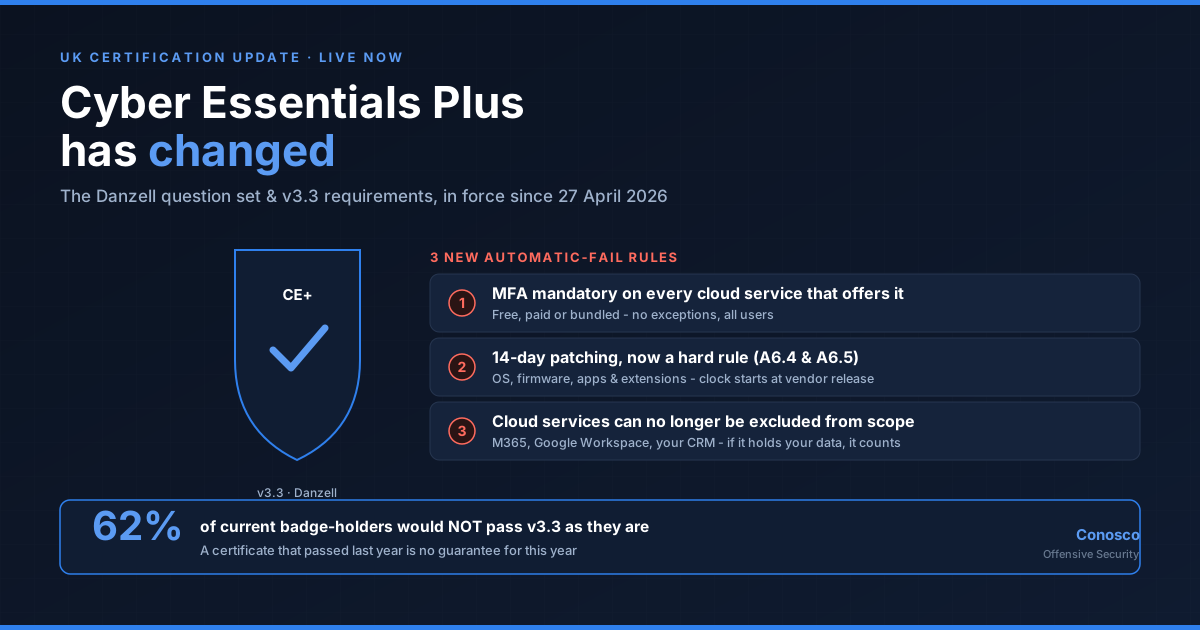 Cyber Essentials Plus changes 2026: The Danzell UpdateCyber Essentials changed in April 2026. A clear guide to the Danzell question set, v3.3, the new auto-fail rules and what they mean for your certification.
 What are the OWASP Top 10 vulnerabilities?The OWASP Top 10 lists the most critical risks to web applications. Here is what each risk means, why it matters to your business, and how to test for it.
 24 billion leaked credentials: what UK businesses need to knowA 24-billion-record credential database has been exposed. Here is what the leak means for UK SMEs and the steps to take right now.
 Email misconfiguration: the silent risk hiding in your business inboxEmail misconfiguration leaves your domain open to spoofing and fraud. Learn what SPF, DKIM and DMARC gaps cost UK businesses and how to close them.
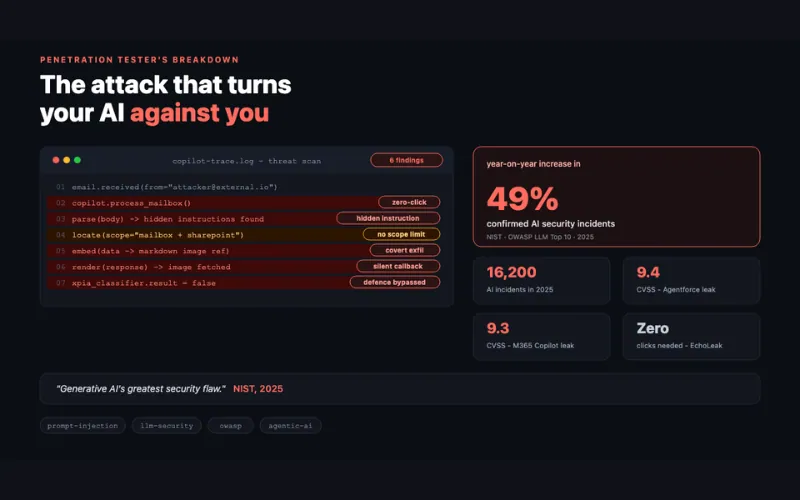 Prompt Injection - the attack that turns your AI against uouPrompt injection is OWASP's #1 LLM vulnerability. Real CVEs, real incidents on Microsoft Copilot and Slack AI, and how to test and defend against it.
 Annual penetration testing is no longer sufficient for board assuranceAnnual pen tests give boards a point-in-time snapshot, not ongoing assurance. Here is what adequate cyber governance actually requires in 2024 and beyond.
 Novo Nordisk cyberattack: what reported extortion attempt shows about data riskNovo Nordisk's cyberattack reveals critical data risks and the evolving nature of extortion, highlighting the importance of cybersecurity preparedness and response.
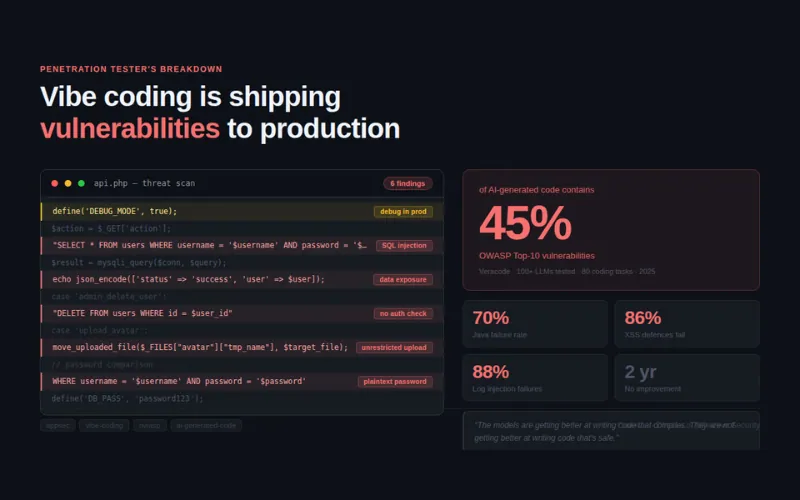 The dangers of vibe coding45% of AI-generated code contains OWASP Top 10 flaws. See exactly how vibe coding creates SQL injection, RCE and broken auth - and how to fix it.
 What a penetration test actually findsDiscover how penetration testing identifies vulnerabilities, validates risks, and provides actionable insights for enhancing your organization's security posture.
 How often should you have a Penetration Test?Learn how often your organisation should conduct penetration testing and the importance of timely remediation to enhance security and mitigate risks.
 What happens after a penetration test?After a penetration test, the report is only the starting point. Learn how findings are reviewed, prioritised, fixed, validated and turned into clear remediation evidence.
Start here.
Book a call with an expert, or get a quote for the service you already know you need.