.png?width=55&height=41&name=conosco_icon_lightbg%20(1).png "conosco_icon_lightbg (1)")
by Aaron Flack on Jun 18, 2026
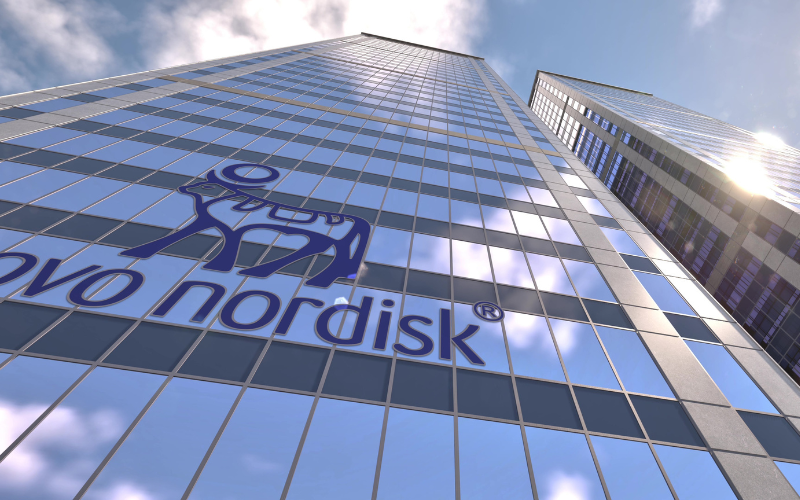
Novo Nordisk has confirmed an IT security incident involving unauthorised access to a limited number of internal systems and the external copying of some data, including information linked to patients participating in certain clinical trials.
The breach has since become the subject of a wider extortion claim. Reuters reported that cyber extortion group FulcrumSec claimed to have stolen more than a terabyte of data from Novo Nordisk and demanded $25 million from the company. Reuters also made clear that it could not independently verify the authenticity of the data posted by the group.
Novo Nordisk has confirmed the security incident. The wider claims about the volume, nature and commercial value of the stolen data remain claims from the alleged threat actor.
What Novo Nordisk has confirmed
Novo Nordisk’s own incident notice states that the affected data involved a limited amount of information about some clinical trial participants. The company said the exposed patient data was not directly linked to names or other direct identifiers.
The categories listed by Novo Nordisk include patient ID, trial participation information, sex, year of birth, biomarkers, health or immunogenicity data, and lifestyle factors such as smoking, alcohol use and body mass index. Novo Nordisk said it does not consider the incident to enable a third party to identify clinical trial participants without access to further underlying information.
The company has also said its core business operations remain up and running, although certain internal IT systems were temporarily taken offline as part of its response.
From a security perspective, that makes this more than a simple “data breach” story. It appears to involve unauthorised access, external data copying, incident containment, regulatory engagement, and a live reputational challenge driven by public claims from an extortion group.
Why pseudonymised data still matters
Pseudonymised data is not the same as named patient data.
Novo Nordisk has stated that direct identifiers such as patient names were not exposed. It also said that affected patients do not need to take any specific action, while advising them to remain vigilant and report anything unusual that could be linked to the incident.
However, pseudonymised does not mean worthless. In clinical, pharmaceutical, and healthcare environments, data can remain sensitive even when direct names are removed. Trial participation, demographic information, biomarkers, and health-related data can still hold value for criminals, competitors, or other actors when combined with other information.
Scientific American reported expert concern that breached data should not be assessed in isolation, because criminal and state-linked actors may correlate information from multiple breaches to build richer profiles of possible targets.
The reported FulcrumSec claim fits a familiar yet serious pattern: data theft used as leverage.
According to Reuters, FulcrumSec claimed it had spent more than two months inside Novo Nordisk’s networks and said the data included source code, proprietary drug information, trial data, employee data, doctor data, patient data, production facility information and internal artificial intelligence model information. The group also claimed it was exploring private sales after the alleged $25 million demand went unpaid.
Again, those are claims from the group, not confirmed facts from Novo Nordisk.
But the structure of the alleged incident is consistent with the way cyber extortion has evolved. Attackers do not always need to encrypt systems to create pressure. If they can copy enough sensitive data and then threaten disclosure, sale, or selective release, they can still create legal, commercial, and reputational consequences.
For pharmaceutical organisations, the risk is particularly layered. Patient trust, clinical trial integrity, research and development investment, intellectual property, regulatory obligations and operational continuity all sit close together. A breach affecting any one of those areas can quickly become a board-level issue.

What security teams should take from the incident?
The immediate lesson is not that every organisation needs to panic about every breach headline. Cyber resilience needs to account for data exposure, not just downtime.
A business can remain operational and still face a serious incident. Novo Nordisk has said its main platforms remain operational, but the confirmed data copying and reported extortion claims show why continuity is only one part of the picture.
Security leaders should be asking whether they can answer five questions quickly during an incident:
What systems were accessed?
What data was copied?
How long was the attacker present?
Which identities, credentials or access paths were involved?
What evidence will be needed for regulators, customers, partners and affected individuals?
Those questions require preparation before an incident starts. Logging, detection, identity controls, data classification, incident response planning and clear decision-making routes are not administrative extras. They are what allow an organisation to move from uncertainty to evidence.
The Novo Nordisk incident also reinforces the need to look beyond the first disclosure. Early breach statements are often necessarily limited. They reflect what is known at the time, not the final scope. As investigations progress, new information can emerge from forensic work, regulators, third-party reporting, affected individuals or, in some cases, the threat actor itself.
That does not mean organisations should treat every criminal claim as fact. They should not. It does mean response teams need a disciplined way to validate claims, preserve evidence, communicate carefully and avoid being pulled into the attacker’s narrative.
A healthcare breach with wider implications
Novo Nordisk is a high-profile pharmaceutical company because of drugs such as Ozempic and Wegovy. That public profile increases attention, but the underlying issue is not limited to major pharmaceutical brands.
Any organisation holding sensitive personal data, regulated data, intellectual property or operationally important information can face the same pattern. The attacker’s objective may not be to shut the business down. It may be to steal enough data to create pressure.
That is why this incident is worth watching from a cybersecurity perspective. Not because every claim is proven. Not because pseudonymised data should be treated as identical to named patient records. But because it shows how modern extortion sits at the intersection of data governance, identity security, monitoring, incident response and public communication.
The strongest organisations are not the ones that assume breaches will never happen. They are the ones that can prove what happened, contain it quickly, communicate with precision and reduce the attacker’s leverage.

Sources

The Legal Aid Agency cyber attack: what went wrong, and what happens next
What happened In April 2025, the Legal Aid Agency (LAA), part of the Ministry of Justice, suffered a catastrophic cyber attack. The breach exposed deeply personal and sensitive information of individuals who applied for legal aid services — potential …
Cyber Security and Resilience Bill explained
The Cyber Security and Resilience Bill cleared its third reading in the House of Commons on 10 June 2026 and received its first reading in the House of Lords on 17 June. It’s the most significant update to UK cyber security law since the Network and …

The Retail Crisis: M&S, Co-op, and Harrods Under Siege
What Has Happened So Far In April 2025, three of the UK's most prominent retailers—Marks & Spencer (M&S), the Co-operative Group (Co-op), and Harrods—fell victim to coordinated UK cyber attacks. These breaches exploited vulnerabilities in IT …
.png?width=220&height=165&name=image%20(4).png)