Artificial intelligence (AI) has seamlessly woven itself into the fabric of most organisations, often emerging as a practical tool rather than through a deliberate strategy. Technologies are usually adopted based on their immediate utility, rather than being subject to formal governance frameworks. This unregulated adoption presents a critical gap that ISO/IEC 42001:2023 intends to address.
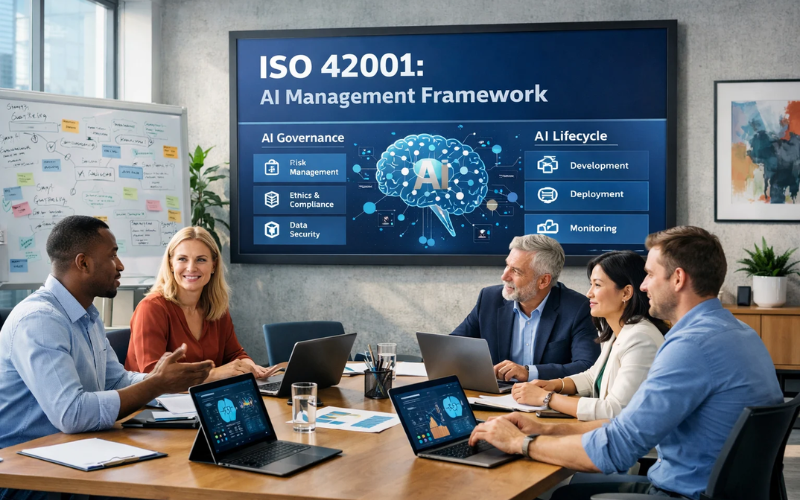
This standard is groundbreaking as it is the first internationally recognised framework specifically developed for the management of artificial intelligence. ISO 42001 provides organisations with a comprehensive framework for overseeing the utilisation, management, and monitoring of AI within the confines of an Artificial Intelligence Management System (AIMS).
Organisations with ISO 27001 experience will find the underlying principles of ISO 42001 familiar. It emphasises the importance of establishing a defined scope, thoroughly documenting controls, ensuring processes are subject to audit oversight, and promoting a culture of continuous improvement. These principles are now applied with the same rigour and discipline to the burgeoning field of AI, ensuring that its deployment is safe, ethical, and effective.
What it actually covers
ISO 42001 emphasises the operational aspects of artificial intelligence (AI) in a business context, focusing on how AI functions in practice rather than solely on its design and development. This distinction is critical for organisations seeking to leverage AI effectively.
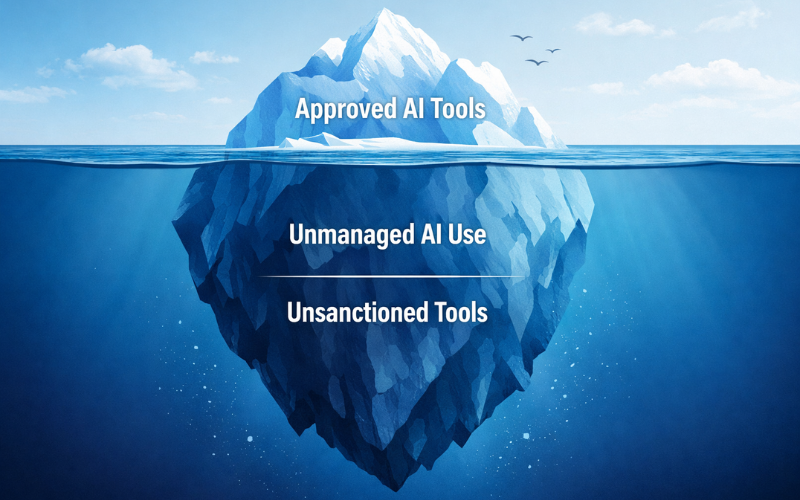
Many organisations already have various components in place for AI governance, such as data management policies, security measures, and oversight and accountability mechanisms. However, a significant challenge arises from the lack of integration among these disparate components. Often, AI initiatives and capabilities are distributed across different departments or teams, leading to a fragmented approach without clear ownership or responsibility. This disconnection can result in inefficiencies and inconsistencies in how AI is utilised and monitored within the organisation. Consequently, there is a pressing need for a cohesive framework that aligns these parts, ensuring a unified, strategic approach to AI implementation and management. The standard forces structure around that.
It looks at things like:
-
How AI systems are introduced and approved
-
What data they rely on and how that's governed
-
How risk is identified, assessed, and treated
-
Who is accountable for outcomes
-
How performance is monitored over time
Why businesses are paying attention
The ongoing discussions about AI governance often focus on ethics and the potential for future regulations, both of which are important considerations. However, it's crucial to recognise that immediate commercial pressures are influencing current decisions.
Procurement teams are beginning to ask more detailed questions, while clients seek greater clarity on how AI is integrated into services. Investors are interested in tangible evidence of control rather than just ambitious promises. Within organisations, teams are moving at a pace that leadership is struggling to keep up with.
In this context, ISO 42001 serves as a solid foundation for accountability. It ensures that decisions are documented, risks are identified early, and there is a clear explanation of AI's usage and its acceptability. This transparency can significantly enhance trust in practice, shaping whether deals progress or face delays.
Furthermore, when governance is well-defined, it empowers teams to act with greater confidence. This clarity reduces the time spent on unravelling decisions after the fact, allowing organisations to focus on advancing initiatives and driving progress effectively.
What implementation looks like
Most organisations embark on their journey with a fundamental uncertainty about the actual utilisation of AI within their operations. This lack of clarity can be addressed swiftly through a comprehensive gap analysis. This process involves a meticulous examination of existing systems, data flows, ownership structures, and potential risk exposures. It's also an opportunity to evaluate internal capabilities—determining who within the organisation possesses the expertise to assess these complex systems accurately.
Based on the insights from the gap analysis, the next step is to clearly define the scope of your AI Management System (AIMS) and establish a robust risk management framework. The principles outlined in ISO 42001 draw on well-established risk management practices, particularly those aligned with BS 31000, providing a familiar yet contextually adapted approach.
The real work begins in the build phase, where the foundation of your AIMS is constructed. This involves establishing governance structures, formulating policies, documenting processes, and mapping out controls. It is crucial that these elements accurately reflect the organisation's operational realities rather than merely conforming to an idealised representation found in documents.
Once the system is built, it must be actively engaged and managed. This phase includes ongoing monitoring, internal audits, and evidence collection to ensure compliance and effectiveness. The standard emphasises that the system should be dynamic, continuously improving and evolving, rather than settling into a static state.
Time and cost
Smaller organisations or those with limited AI usage can move relatively quickly. A few months is realistic if governance is already in decent shape.
Larger environments, or ones where AI has spread without much control, take longer. Six to twelve months is common once you factor in internal alignment and change.
Cost follows the same pattern. It's driven less by certification fees and more by the effort needed to get the organisation into a state where certification is possible. That includes internal resources, policy development, and system changes where needed.
Why moving early matters
Delaying the establishment of regulatory frameworks may seem reasonable, but it often creates greater challenges in the future. The adoption of AI technologies continues to accelerate, particularly in sectors that are more difficult to monitor. When governance remains informal for too long, it becomes increasingly difficult to implement necessary changes later.
By introducing structured governance early on, organisations can create a solid foundation that allows for better management of AI initiatives. This proactive approach helps to maintain control rather than attempting to impose regulations retroactively.
Additionally, there is a strategic advantage for organisations that can demonstrate effective oversight of their AI applications. These organisations stand out in their industries not just through their discussions of AI governance, but also through concrete evidence of their practices. This ability to demonstrate stability and oversight significantly enhances their credibility with clients, investors, and regulatory bodies.
Trust, transparency, and control
At a basic level, ISO 42001 is about making AI visible inside the business.
Clause 7 emphasises communication and transparency. Information needs to be accessible, decisions need to be explainable, and stakeholders need to understand how AI is being used.
That feeds directly into trust. When systems behave predictably and oversight is clear, confidence follows.
It also improves performance. Better data governance, clearer accountability, and continuous monitoring all contribute to more reliable outcomes.
Speak to our team about ISO42001 and AI Governence in your business

.png?width=55&height=41&name=conosco_icon_lightbg%20(1).png "conosco_icon_lightbg (1)")


.png?width=220&height=165&name=image%20(4).png)