Why Regulation, AI DLP and ISO 42001 Are Commercial Advantages
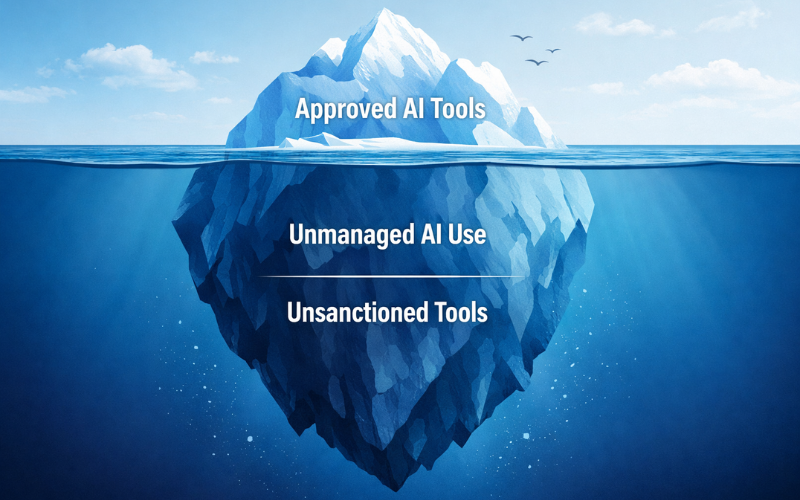
AI usage has already spread beyond formal approval as teams are using generative tools to accelerate work. Software vendors are embedding AI into platforms that were signed off on years ago, data is moving into models, outputs are influencing decisions, and, in many cases, no one is tracking any of this with any precision.
What matters now is clear visibility and unwavering accountability, along with the ability to demonstrate both under pressure. This pressure is no longer hypothetical as it is manifesting in tenders, audits, and regulatory scrutiny, and we must rise to meet it head-on.
Organisations are being assessed on how they manage AI, not whether they use it.
Procurement teams are asking for any kind of visibility on:
-
Where AI is being used across the estate
-
What data is exposed to external models
-
How outputs are validated before influencing decisions
-
Which controls are in place and how they are enforced
Most responses repeat policy statements, statements of intent, acceptable use guidelines, or high-level assurances.
When evidence is weak or fragmented, it indicates that risk is not being effectively managed. This assumption can hinder decision-making, attract increased scrutiny, and redirect confidence toward competitors who clearly demonstrate control.
This is where AI governance significantly impacts revenue, as well as risk management.
Restriction Creates Blind Spots
A large part of the market is still focused on limiting access to AI tools
Block external platforms. Restrict usage. Control endpoints.
The logic is not new; it clearly reflects past attempts to tackle Shadow IT. Yet, it consistently produces the same outcome: usage persists while becoming increasingly obscure.
AI is already embedded in:
Even with restrictions in place, workarounds appear quickly. Personal devices, manual data entry, screenshots shared outside managed environments.
As control diminishes, confidence inevitably increases. This powerful combination exposes vulnerabilities that are not easily recognised and become even harder to defend against when questioned.
AI Data Loss Prevention Needs a Different Model
Traditional Data Loss Prevention (DLP) systems were established for stable environments and predictable data flows. The reality today, however, is that AI introduces significant variability on both sides. Data can be inserted into prompts, altered by models, and returned in ways that are nearly impossible to trace. The same input can generate different outputs, and identical user behaviour can pose varying levels of risk depending on the context. Attempting to control these challenges with static rules tied to specific tools is simply insufficient and ineffective.
A more effective approach focuses on behaviour:
This transition shifts DLP from a tool-centric model to a risk-centric approach, establishing a strong foundation for something far more critical than mere prevention. It creates an undeniable evidence trail. When an incident occurs or due diligence is triggered, the discussion must swiftly move beyond policy.
Questions become specific:
-
What data was exposed
-
Which systems were involved
-
What controls were in place
-
How decisions were made
-
What actions were taken in response
The ability to answer these questions clearly is crucial in determining the outcome. This holds true in competitive situations as well. When two organisations have similar capabilities, the one that effectively demonstrates governance, traceability, and control in a structured way earns greater trust.
Many organisations fall short in this area, not because they overlook AI risk, but because their approach is lacking. Controls may exist, but they are likely disconnected. Similarly, policies are likely in place, but the odds of their consistent enforcement are low. Monitoring is probably conducted, but it likely fails to produce usable evidence. Organisations must adopt a more integrated and proactive strategy to effectively address these gaps. It's essential that they take decisive action.
ISO 42001 Brings Structure to a Fragmented Problem
ISO 42001 is critically important for commercial success. It establishes a robust framework for effectively managing AI systems that encompasses:
-
Governance and accountability
-
Risk assessment and mitigation
-
Data management
-
Transparency and explainability
-
Continuous monitoring and improvement
This framework seamlessly integrates these elements into a unified system. Instead of relying on isolated controls, organizations are empowered to build a model that is not only understandable but also auditable and demonstrable. This is essential in three vital areas:
1. Tenders and Procurement
Organisations that can align to a recognised framework reduce perceived risk. Procurement teams have something concrete to evaluate.
2. Regulatory Scrutiny
When regulators assess AI usage, they look for structure. A recognised framework provides a clear reference point and reduces ambiguity.
3. Internal Decision Making
Leadership teams gain clear visibility into the utilisation and management of AI. As a result, decisions are made with greater confidence and proactivity. ISO 42001 does not eliminate risk; it ensures that risk is manageable and demonstrable.
Good AI Governance is not theoretical
Effective AI governance is not built solely through policy. It requires a combination of:
-
Clear visibility of AI usage, including embedded and unapproved tools
-
Data classification that reflects how information is actually used
-
Behaviour-based controls that adapt to context
-
Training that reflects real user behaviour, not ideal scenarios
-
A culture where issues can be surfaced early without penalty
Some organisations are introducing amnesty programmes that encourage teams to disclose how they use AI without immediate consequences. This improves visibility quickly and creates a more realistic baseline. From there, controls can be applied with precision rather than assumption. This is slower than blocking access. It is also far more effective.
Commercial Reality
AI governance is increasingly a critical differentiator for organisations. It's clear that companies are not rewarded for perfection; rather, they are compared against one another. When a tender is submitted, an audit is conducted, or an incident arises, organisations that demonstrate structured control are viewed as more trustworthy and easier to collaborate with. Conversely, those lacking this capability are put on the defensive, forced to explain their shortcomings rather than highlight their strengths. The gap between these two positions is widening, and it’s essential for organisations to take action to establish their credibility in the marketplace.
Most organisations don’t need a complete overhaul to enhance their position; taking small, targeted steps can lead to significant improvements. It's essential to recognise that these incremental changes can create a powerful impact.
Practical starting points:
-
Map where AI is currently being used, including embedded features in existing platforms
-
Identify what data is flowing into those systems and how it is classified
-
Establish visibility into user behaviour, not just tool usage
-
Begin building an evidence trail around decisions and controls
-
Align existing controls to a recognised framework such as ISO 42001
Early adoption
AI will continue to expand across every part of the business.
Attempts to contain it will fall short. Attempts to ignore it will create risk. The organisations that accept this and focus on structured governance will find themselves in a stronger position when it matters most. Not because they have removed risk entirely, but because they can clearly and confidently show how it is being managed.
That is what buyers, regulators, and partners are increasingly looking for.
And it is already influencing who they choose to work with.
Speak to our team about ISO42001 and AI Governence in your business

.png?width=55&height=41&name=conosco_icon_lightbg%20(1).png "conosco_icon_lightbg (1)")



.png?width=220&height=165&name=image%20(4).png)